Alaska has two things going for it that Northern Canada does not. The first factor explains why Alaska has always supported a larger population than Northern Canada and the second factor explains why Alaska now has many times the population density of Yukon, Northwest Territories and Nunavut.
First and foremost, Alaska has a lot of coastline and much of that coastline is ice-free for all or most of the year. Most towns in Southeast and Southcentral Alaska got their start as fishing villages or ports serving inland mining operations (including mining in Canada).
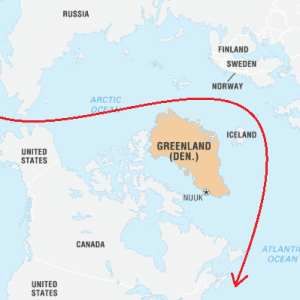
Meanwhile, Western Alaska has some of the world’s most productive fisheries. Head east and you’ll find that Hudson Bay and the Northwest Passage are frozen over for 9–10 months of the year. As a result, coastal settlements in Northern Canada are generally limited to small communities that practice traditional subsistence lifestyles.
You might be thinking “Anchorage and Fairbanks aren’t year-round ice-free ports, so why would people want to live there but not Whitehorse or Yellowknife?” The second reason so many more people live in Alaska than Northern Canada is the US Military.
Thanks to the legacy of World War II and the Cold War, Alaska has a huge military presence. Absent the military, Fairbanks probably wouldn’t be much larger than its Canadian equivalents. Anchorage would likely still be a major shipping hub for geographical reasons but probably at a much smaller scale.
The Canadian government did encourage people to settle in parts of Nunavut to defend its territorial claims in the region but that’s a drop in the bucket compared to the number of soldiers and airmen stationed in Alaska.
If you look at a map, Alaska hogs all of the Pacific coast north of British Columbia.
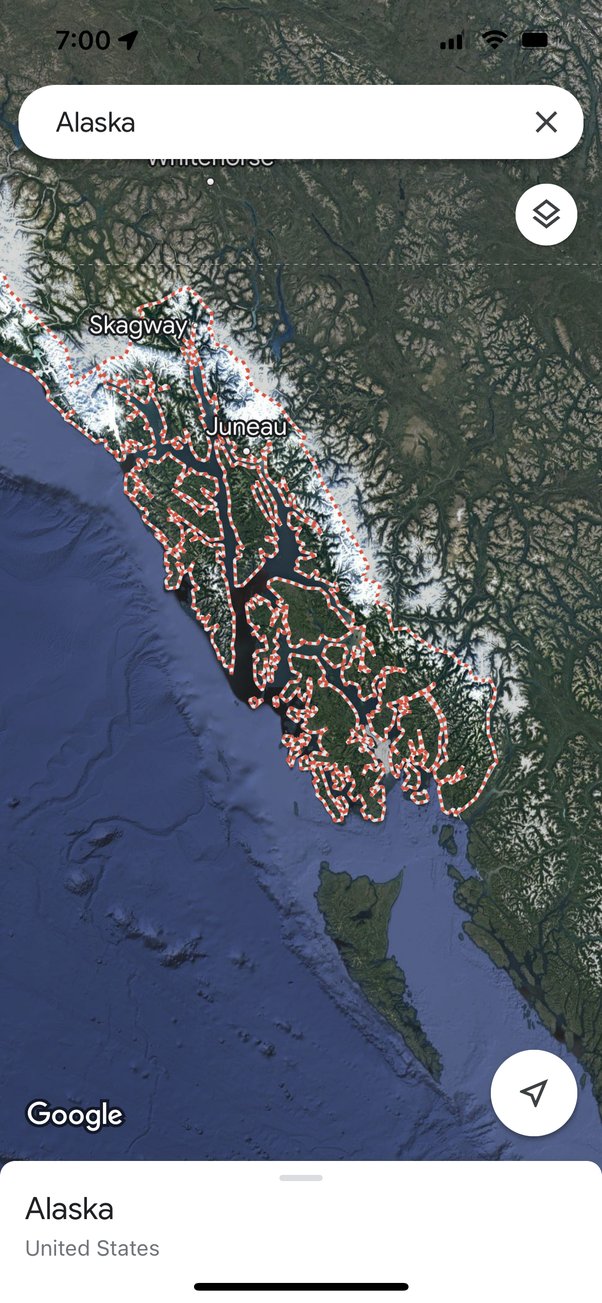
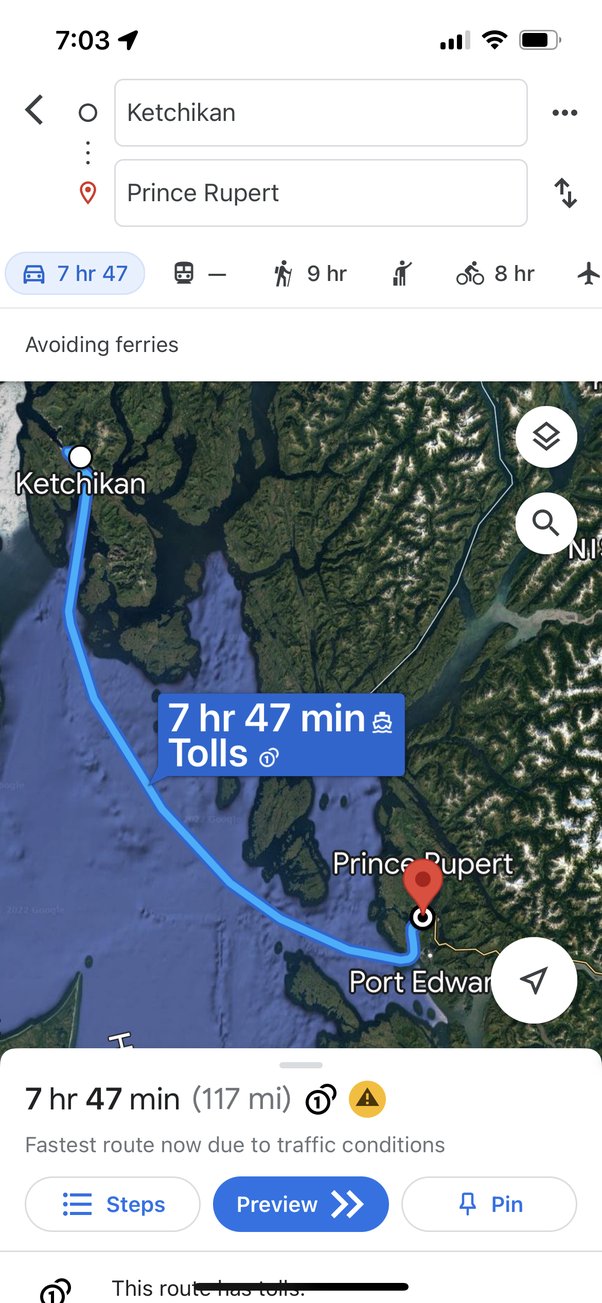
That’s part of the reason. The northernmost Canadian City along the coast is Prince Rupert, British Columbia with a population of 12,000, 7 hours south of the nearest inhabited part of Alaska by ferry.
Another factor is the lack of natural resources on the Canadian side of the border, and bad fortunes with existing resources. An inland Canadian town, Kitsault, was built on a Fjord a couple hundred kilometres north of Prince Rupert.
It would have had not only sea access, but fast ROAD access to Canada and the Alaska highway.
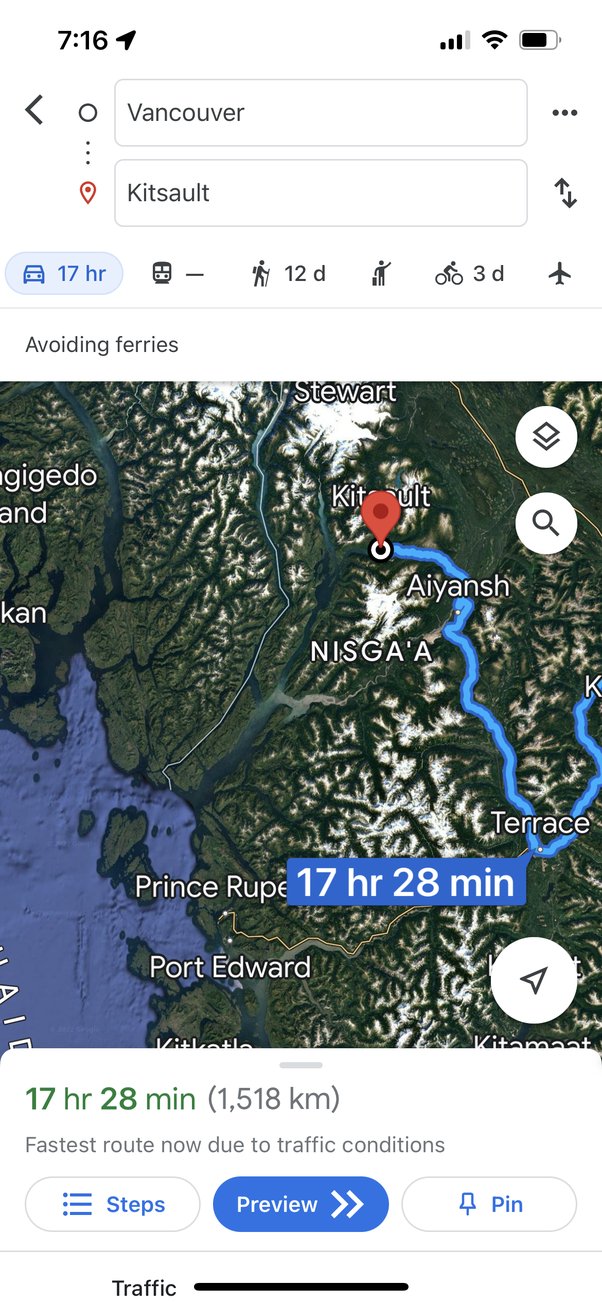
The town was built on a vein of molybdenum, with 1,200 residents. However, when the price of molybdenum crashed in 1982, the town was abandoned and now has only one person living there—a Canadian-Indian oligarch who has restored the town with its 1980s vibes.

Incidentally, the site of the ill-fortuned Klondike Gold Rush in Canada, Dawson City, currently has a population of 1,577, down from a high of 17,000 in 1899.
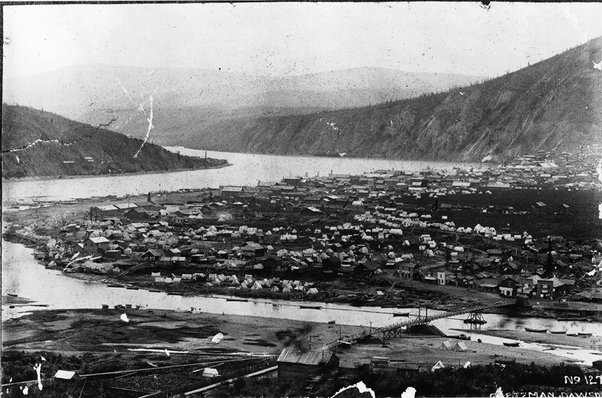
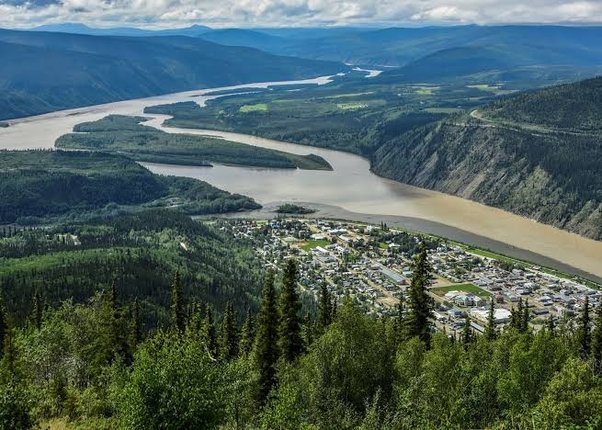
At the turn of the 20th century, Dawes City was more populous than Sitka and Anchorage wasn’t even founded yet. The population quickly left though when it was clear there was no fortune to be made. By 1901, the population had fallen to under 10,000.
By 1911, it had just 3,013, and 975 a decade later in 1921.