I worked with an Army E-7. One day while visiting him in his office, I noticed photos of him wearing various Officer ranks up to and including O-4 (Major). I asked him about it and he said he accepted a temporary commission from SFC enlisted level.
After the end of the war, he was reverted back to his enlisted rank. I was dumbfounded! The Navy had similar enlisted to temporary officer programs but enlisted men who accepted temporary officer appointments were promoted to higher permanent enlisted levels as they progressed through the temporary officer ranks so that a CPO (E-7) for example might wind up as a Master Chief (E-9) once he reverted to enlisted status. Not so in the Army or so it seemed.
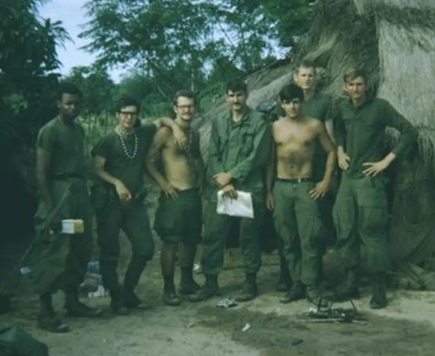
I don’t know any Marine who turned down a commission during the Vietnam War. According to the National Order of Battlefield Commissions, the Army had none in Vietnam. The Marine Corps had several thousand SNCOs commissioned to Second Lieutenant. I was a Sergeant when selected and made Staff Sergeant while waiting for my commission in Vietnam.
We didn’t attend OCS or The Basic School. I had already been serving as a Platoon Leader and my Staff Sergeant chevrons were replaced by gold bars in my Battalion commander’s tent in the Chu Lai sand dunes.
The Army solved the leadership gap with an “instant Sergeant” program and I assume it helped.
Turning down additional leadership responsibilities would have been the “kiss of death” in the Corps. We were bleeding Second Lieutenants and gladly filled those positions, mostly Infantry.
When I graduated from college having had two years of high school and two years of college ROTC, I knew that I would quickly lose my student deferment. That would make me a poor candidate for civilian employment and if I were drafted (conscripted) I would probably forego my choice of military service.
Although I scored 99+ percentile on the US Air Force pilot’s written exam, I was deemed to be too tall between my bottom and the top of my head, so I was rejected for pilot training.
My other options were to enlist with a reserve officer’s commission that had an indeterminate obligation. That concerned me because our country was in an unpopular war which appeared to be dragging out with considerable carnage and no end in sight.
Or, I could enlist to be a non-commissioned officer (NCO) for a total six year obligation that would involve a combination of active duty and active reserves in the field of electronics which could further my engineering career. As an NCO my enlistment would end after six years with no further military obligation. Therefore, I enlisted immediately upon graduation, then went through basic and NCO training.
After joining the Air Force and serving my active-duty time with promotions and leadership positions, I was offered a direct commission as a second lieutenant, which I again declined because it also entailed an indeterminate obligation. Even later offers to be a first lieutenant and then a captain could not entice me into that indeterminate reserve commission.
June of 1970 my enlistment was satisfied with an honorable discharge, multiple letters of favorable communication, leadership training and no further military obligation, freeing me to pursue a civilian career unencumbered.
My enlistment enabled me to serve my country’s missions in areas where my highly specialized training, working with state-of-the-art electronics with automatic tracking radar, missile guidance systems and sophisticated communication systems would be useful to the Air Force. Then I was able advance my civilian career until I finally retired many decades later.