Brick walls
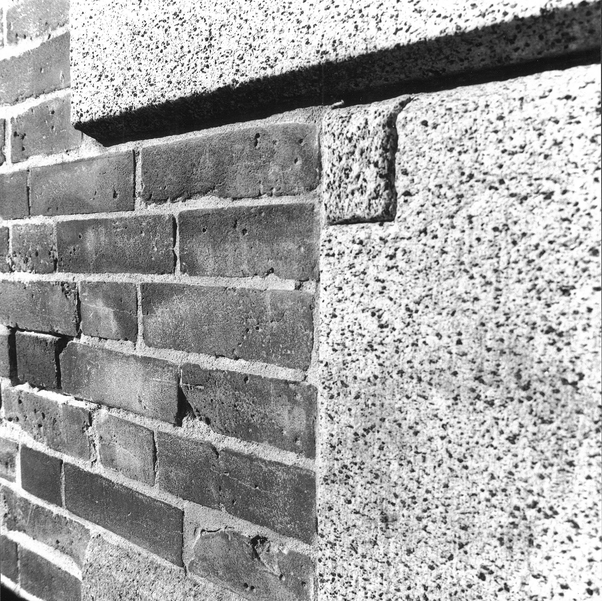
Construction on Fort Point commenced in 1853, during California’s Gold Rush, and finished in 1861, as America’s Civil War began. With two other forts on Alcatraz and Lime Point, it was to be part of a state-of-the-art defensive system, designed to protect San Francisco’s important commercial and military interests from Russian and, later, Confederate attack. Its massive brick-and-mortar walls could withstand a barrage from the heaviest shipboard cannon of the day, while its 141 guns could punish any fleet attempting to enter the Bay through the Golden Gate.
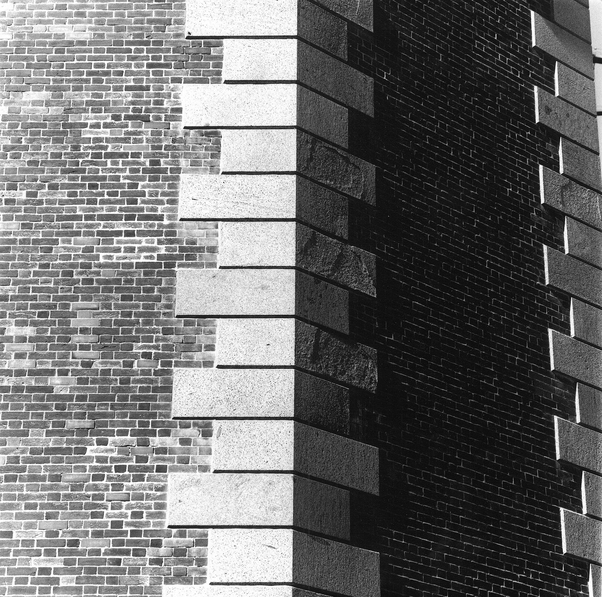
Cannon balls bounce off brick walls like these, but shells from rifled naval artillery (developed to practical effect during the Civil War) penetrate masonry easily. As construction was completed, Fort Point became obsolete, its purpose served by smaller, cheaper earthwork batteries. It would be the only fortification of this design constructed west of the Mississippi River.
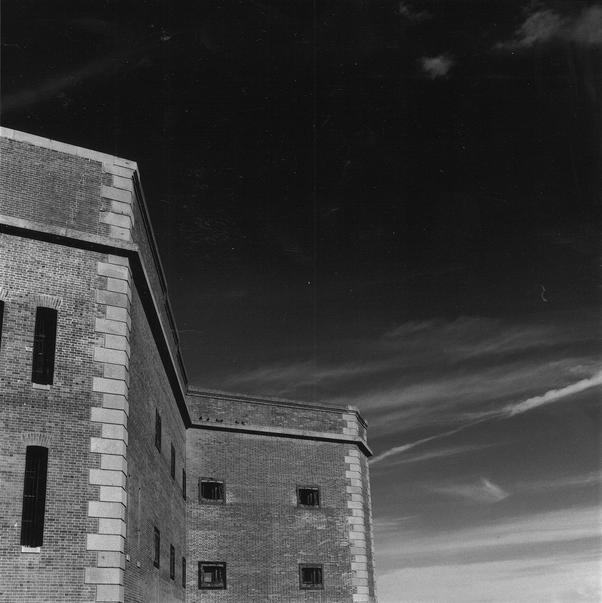
The fort never fired a shot in anger. It intermittently housed deterrent garrisons and lighthouse keepers until it was transferred in 1970 to the National Park Service.
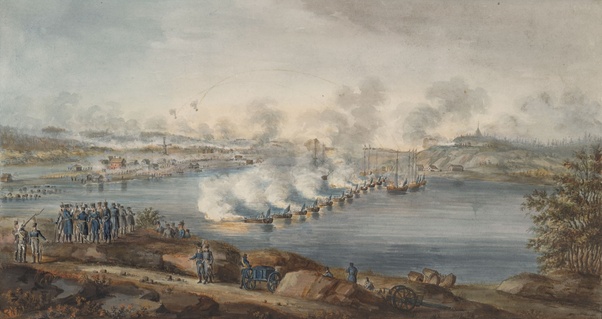
From about 1780 to 1814 the Swedish military was almost constantly at war with France, England, Russia, Spain, Denmark, the Ottoman Empire, Italy, or some combination of these. With the exception of Russia, however, all of these wars involved opponents who could not simply walk to Sweden. Not quickly, anyway.
And so the Swedes came to appreciate the importance of a strong navy.
At the time, ships were made of wood and powered by the wind. The best ships were made of oak and they required tall, mature trees with straight trunks to serve as masts. For much of British naval history, the American colonies with their old-growth forests had provided the necessary timber but Sweden lacked meaningful overseas colonies with which to augment her navy.
So it was that agents of the Swedish Crown came to the island of Visingsö in the 1830s, searching for a place to plant an oak forest. The climate and conditions on the island were ideal for the long, slow growth of oak trees which would grow straight and true, securing the future of the Swedish Navy and the independence of the Swedish people.
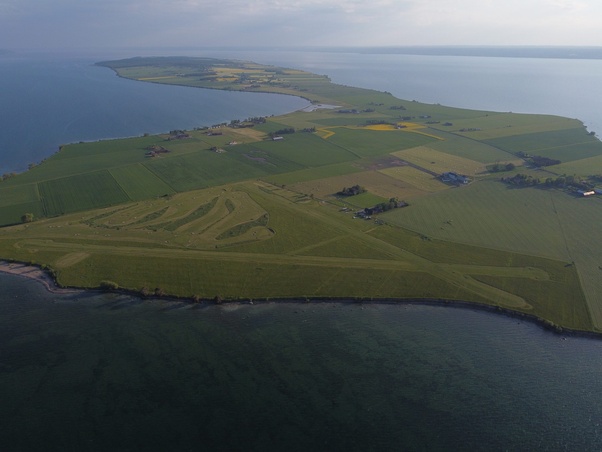
Over the course of the next decade, 300,000 oak trees were planted on the island, interspersed with elms, ash, and other species to force the desired growth patterns to produce straight, tall, seaworthy lumber. And the Swedish Navy waited.
Across the Atlantic, war broke out between the American states and, in the spring of 1862, two unusual ships crossed paths in the brackish waters of the Chesapeake Bay. The Union Ship USS Monitor and the Confederate ship CSS Virginia were ironclads – the first of a new generation of ships with metal armor and a steam powerplant.
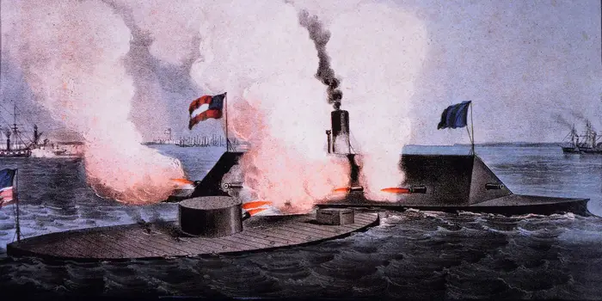
But Ironclads did not develop overnight. The first ships with wrought iron armor took to sea in the 1830s. Explosive artillery shells heralded the end of the wooden hulled “ship of the line” in the 1840s. And the French were experimenting with steam-powered battleships by the 1850s. It was the combination of these technologies in the Ironclad, however, which serves as the demarcation between the age of sail and the age of steam.
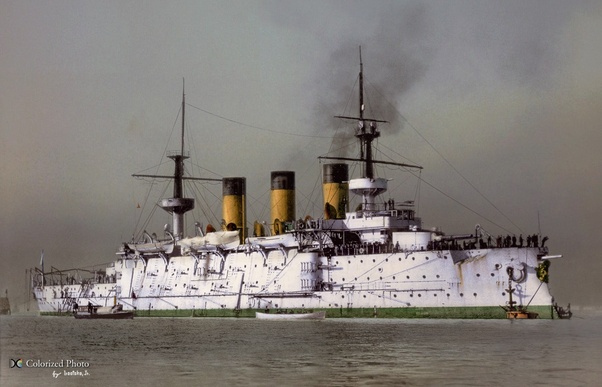
Eventually the Ironclad was eclipsed by the Pre-Dreadnought which gave way to the Dreadnought. The Dreadnought was followed by the Treaty Battleships of the 1920s, the Fast Battleships of the 1930s, and the Super Battleships which came to characterize World War 2 before the role of the armored gunboat was largely put to rest by air power and nuclear weapons.
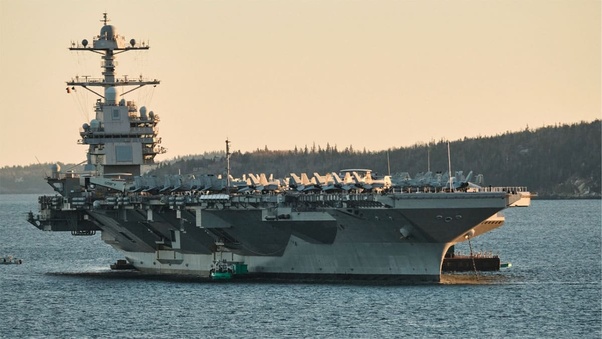
And yet, on the island of Visingsö, the oak trees still grow tall and straight. Two centuries later they are finally ready to fulfill the destiny imagined for them by King Charles XIV John and the Swedish Navy yet the world has passed them by. Instead of ships, masts, and national security, they provide shade and quiet to the island’s 750 residents.
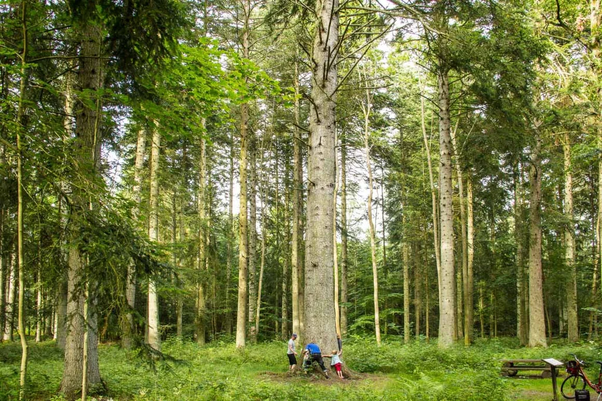
Which is a better life for a tree, all things considered.