No, and here’s the deal: pretty much nothing sent through Lend-Lease came back, despite what the “lending” part might suggest.
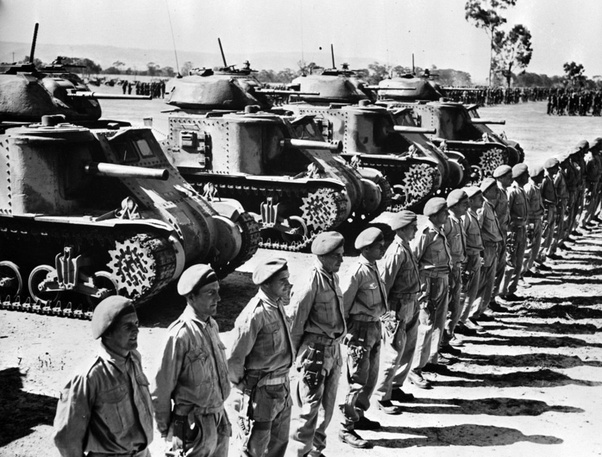
The Soviets got around 7,000 tanks, mostly M4 Shermans and M3 Stuarts, and they weren’t exactly rushing to return them when the shooting stopped.
Any military equipment that wasn’t destroyed during the war could technically be requested back by the US, but, America could only ask for stuff it actually wanted.
But, nobody wanted beat-up tanks that had been through hell on the Eastern Front.
By 1945, most of these tanks were either destroyed, cannibalized for parts, or so worn out they weren’t worth shipping back across the ocean.
The Soviets had also modified many of them to handle their harsh conditions, making them different from standard US models.
Now, Soviets did pay for this stuff, just not by returning it. In 1972, they agreed to pay $722 million (about $11.5 billion today) to settle the whole Lend-Lease debt. This covered everything, not just tanks, but trucks, planes, food, etc.
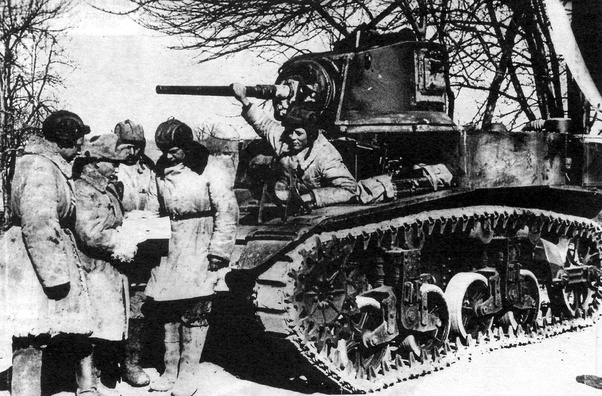
Some of these tanks actually stuck around as monuments. You can still find a few rusting Sherman tanks sitting in Russian cities as war memorials.
But, the Soviets basically treated Lend-Lease equipment as a permanent transfer from day one, and the US eventually went along with it because, honestly, what else were they going to do with thousands of used tanks?
The real payment was in blood anyway, Soviet forces tied down most of Hitler’s army while that equipment was being put to use.
All tanks sent to Soviet Union through Lend-Lease remained with them without any intention of return following World War II. Under the Lend-Lease equipment program most sent assets were not retrieved from the Soviet Union because of the program name inconsistency.
About 7,000 tanks landed in Soviet possession as part of Lend-Lease support including M4 Sherman and M3 Stuart tanks. Few justifiable reasons emerged after the war to prompt the Soviet Union to bring back the tanks. The United States held the legal right to ask for surviving equipment return but most tanks because of their severe damage, excessive use or part stripping made retrieval uneconomical.
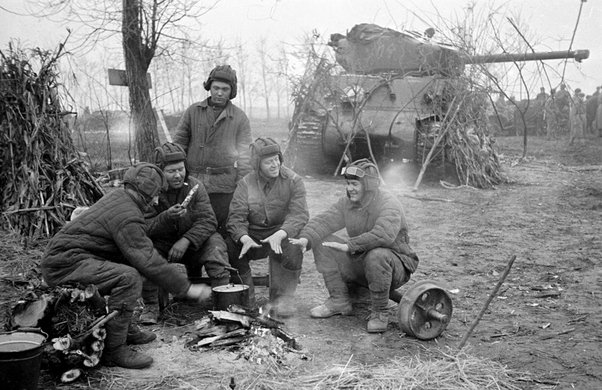
The Soviet Union adjusted several tanks which came from American Lend-Lease deliveries to survive on the severe Eastern Front terrain thus transforming these vehicles from their initial American specifications.
The Soviet Union compensated for their possession of united States equipment through final cash payments. The Soviets finished paying their Lend-Lease debt to the United States through a payment of $722 million equivalent to $11.5 billion in present-day currency values in 1972. The financial payment from the Soviet Union included funding for all types of equipment such as tanks together with trucks along with planes followed by food and miscellaneous supplies.
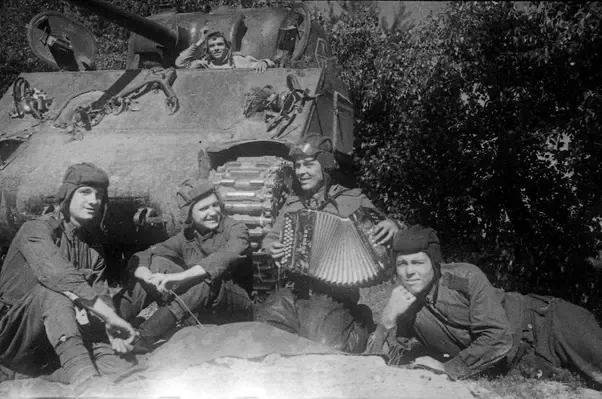
Interestingly, some old Sherman tanks still stand in Russian cities today as war memorials.
As a result of the importance of Lend-Lease tanks during the war the Soviets claimed ownership of these items and the United States silently agreed to this disposition. Numerous soldiers gave their lives for the duration of the Eastern Front war represented the actual price of this conflict.