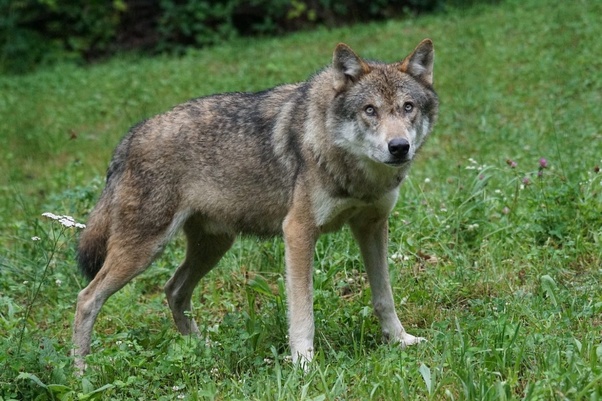
This is a wolf:
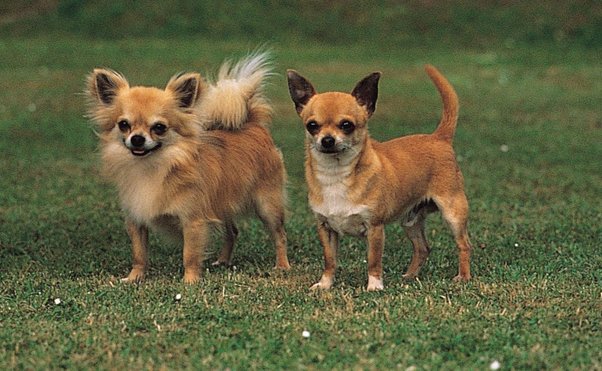
and THIS is a chihuahua:
There is something like 20 thousand generations between them since they shared a common ancestor.
Most tetrapods (land animals with 4 limbs, a backbone, etc.) reproduce on something like a yearly cycle, maybe a bit more often, maybe a bit less, but I think we can reasonably say that most of them produce a generation each year. The split between mammals and reptiles happened roughly 310 MILLION years ago, and thus represents about 310 million generations of divergence. That’s 25 THOUSAND TIMES the difference between a wolf and a chihuahua.
Not only is deep time vast beyond human imagining, but the sheer numbers of individual organisms, each one accumulating and potentially passing on traits, testing new solutions to the puzzle of how to survive and reproduce is even more mind-boggling. 300 million generations, times millions of individuals per generation. Millions, year after year, century after endless century, living, dying, breeding, mutating, changing by an almost immeasurable amount in each generation. But it adds up. It adds up to 25 thousand times the difference between a wolf and chihuahua, to the difference between a man, and a tortoise, and a bird.
And that’s just scratching the surface, because the Earth is 15 times older than that. And when we are talking about microscopic organisms, evolving, we’re FAR beyond any numbers we can imagine at all. A typical bacterium can reproduce every 20 minutes, for 4.5 billion years, and they exist in numbers which we don’t even have words for. Each one testing the environment, trying out another, ever so slightly different formula for success.
No, the question is not how can I accept that evolution is real, the question is how can anyone NOT see it!
Well, first of all it’s actually closer to 4.5 billion years old. But even with that extra 500 million years, no, there’s no possible way that all the life forms currently on Earth could have evolved in that amount of time “just by chance.” I mean, to use a common analogy, that would be as improbable as if a tornado passed through a junkyard and caused an entire functional jet airplane to become perfectly assembled.
Of course, that’s only if it had to happen “just by chance.” Which it didn’t.
Or, sure, chance certainly plays a role in evolution, don’t get me wrong. Mutations and environmental changes that fuel evolution are generally random and do occur just by chance. But the actual process that drives evolution forward, natural selection, is not random and does not happen just by chance.
It is, in fact, a non-random process by which members of a species that are better adapted to their current environment are more likely to survive long enough to pass on their genes to future generations than those members who are not as well adapted.
And it’s this non-random process that causes species to change over time to become new species. And, when sub-populations of one species break off and start encountering different environmental pressures, it’s what causes life to diversify.
And, yes, 4.5 billion years is sufficient time for all of the life we currently see today to evolve to its current state via the non-random process of natural selection. In fact, it’s the exact right amount of time.