
Okay, guy. This is the actual Blue Marble photo.
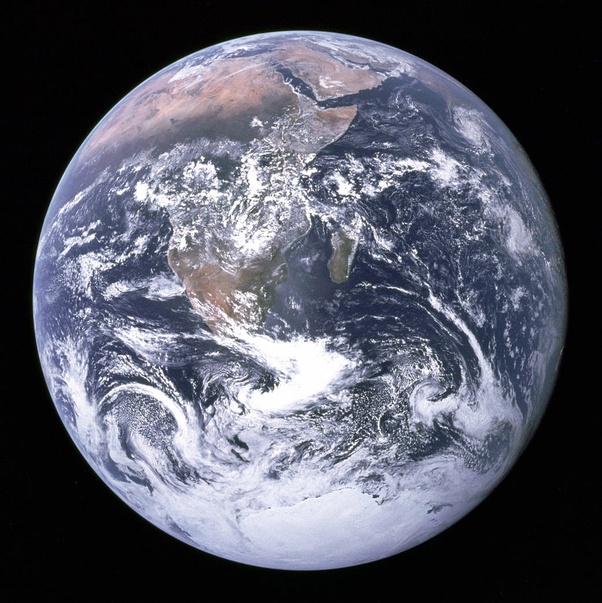
It was taken by Apollo 17. It is NOT a composite image. That really is the Earth when viewed from space. The only edit they did was flip the picture vertically. Because to most people of the Northern Hemisphere, the image looked upside down.
Okay? That was it. That was the only edit.
Apparently some of you think that actual photograph is a cgi image.
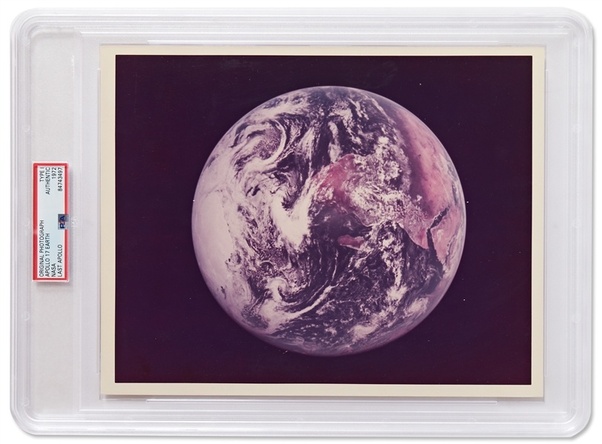
There it is, the ACTUAL PHOTOGRAPH! It is NOT a CGI image. Computers back then couldn’t create an image close to a photograph taken from a camera that had actual film in it.
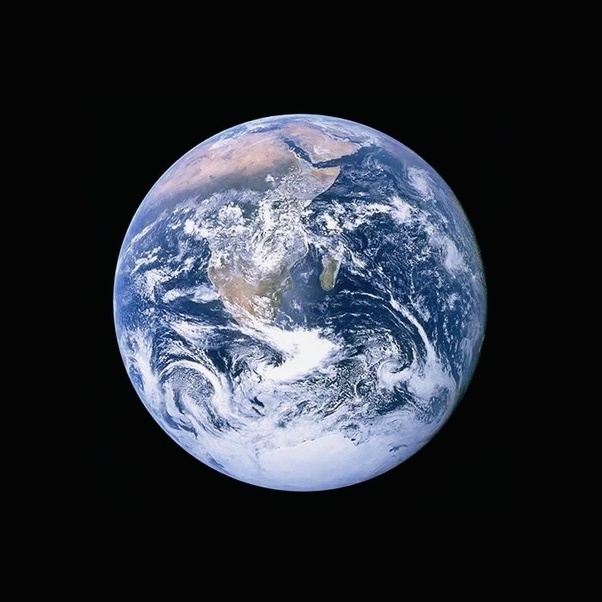
I guess you have trouble distinguishing the famous Blue Marble photograph
(above) and NASA’s composite global mapping image (below), which, perhaps unhelpfully, also goes by the name ‘Blue Marble’.

The well-known photograph of the Earth is actually just one chosen out of dozens taken by the Apollo 17 crew looking back at the Earth while on their way to the Moon in 1972.
The photos were taken directly using a hand-held 70mm Hasselblad camera.
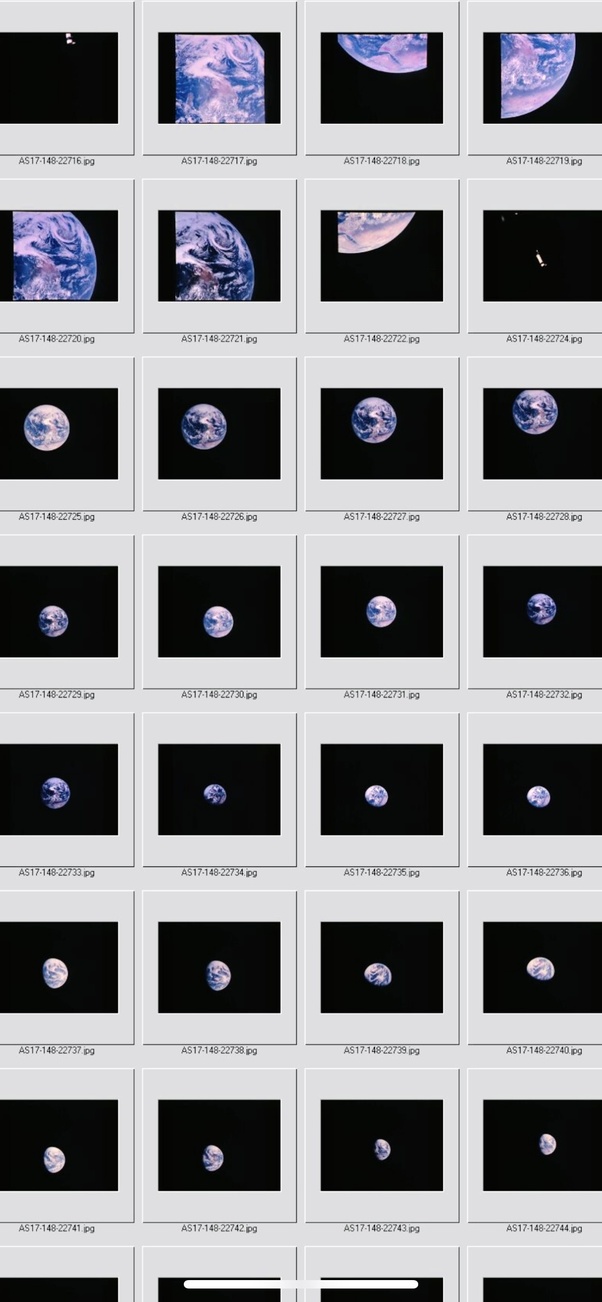
Here’s a few of them in higher definition. The one that has become famous as the ‘Blue Marble’ shot is the third one of the following selection:
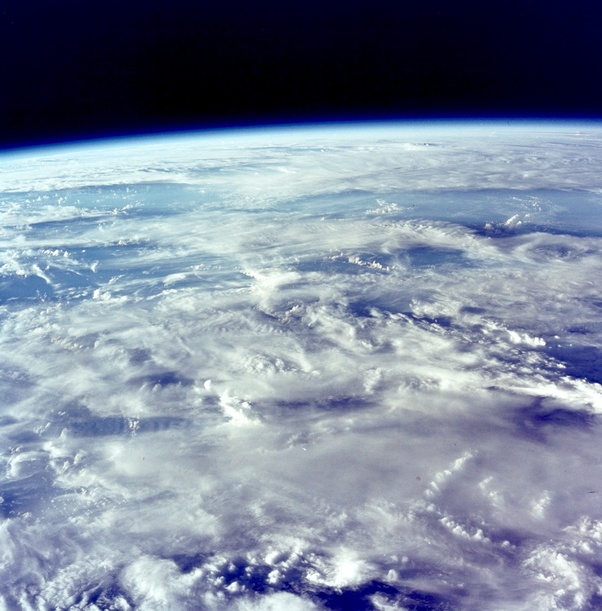
AS17-148-22661
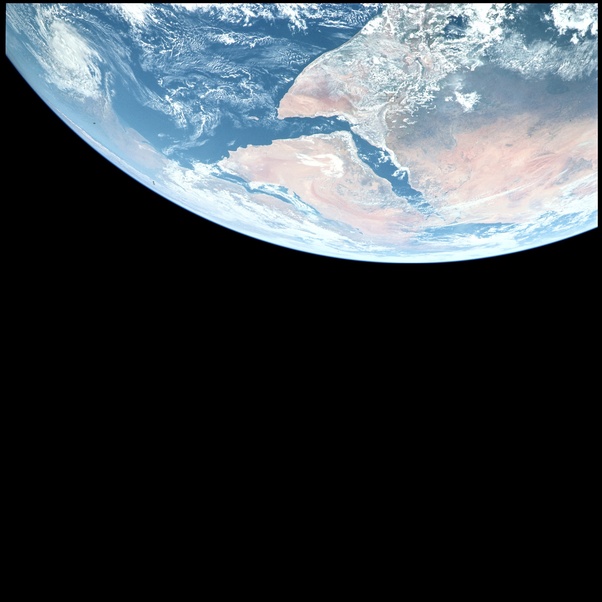
AS17-148–22718
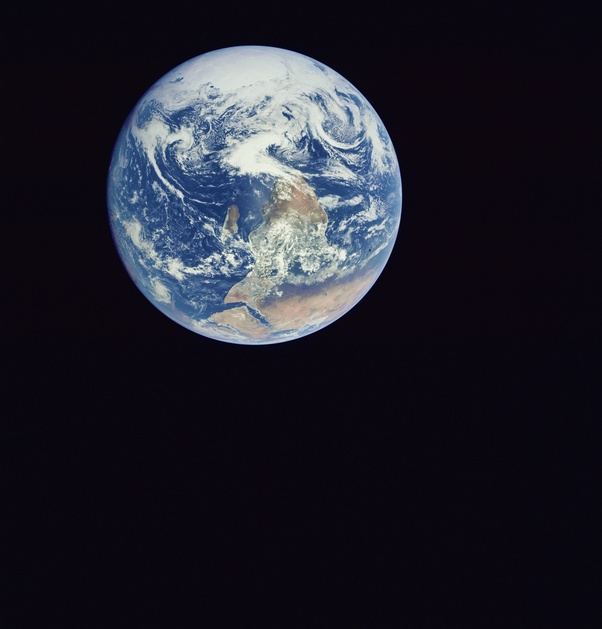
AS17-148–22727
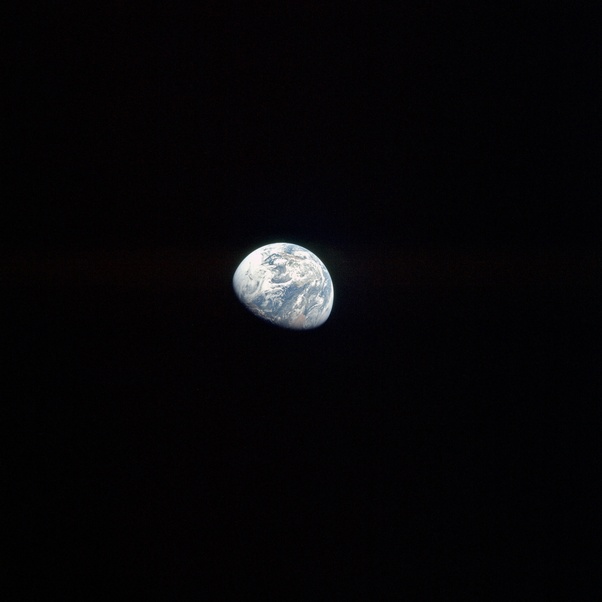
AS17-148–22734
The only ‘post-processing’ done to the famous picture has been to rotate it 180°, simply to show the Earth the familiar way ‘up’. (It was originally photographed upside down, showing the South Pole at the top.)
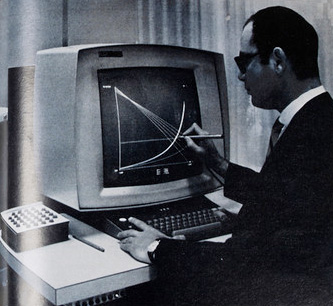
Computer generated? In 1972, computers could barely generate line drawings. Here’s an example of the best CGI at that time.
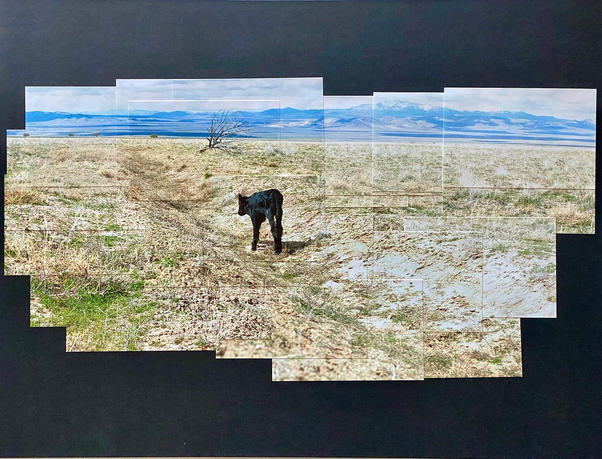
As for composite photos, they are a completely normal way to combine lots of photos to give a panoramic or wide-perspective view. For example, here’s an obviously composite photo of a landscape:
Composite photos are routinely used by NASA and other research agencies, and for good reason. Here, for example, is an actual composite photo of Saturn’s moon Titan:
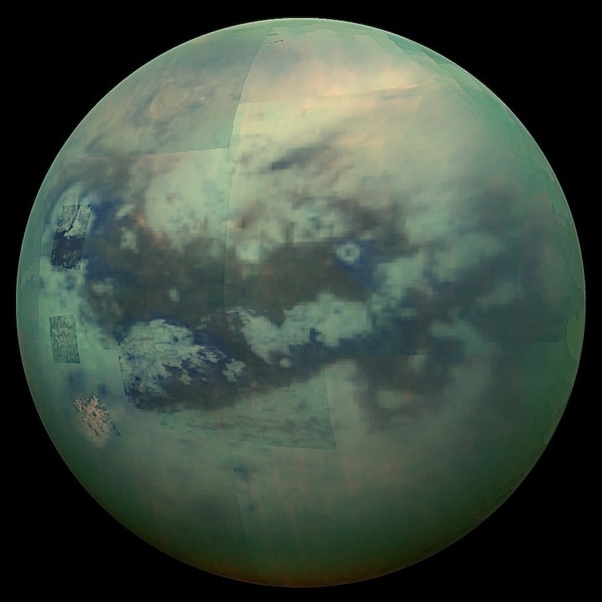
It combines a set of photos taken by the Cassini probe during several close-up flybys of Titan in 2004. Each photo showed a bit of Titan, but none showed all of it. So several photos have been digitally fit together like a jigsaw puzzle to give us an accurate view of the whole of Titan in a single image.
This isn’t fakery or trickery; it’s basic scientific photography.